
If you’re shopping for a new Chevrolet, Buick, or GMC, there’s a fresh incentive to keep on your radar: the One Big Beautiful Bill created a temporary tax deduction that can let you write off auto loan interest on certain new, U.S.-assembled vehicles bought for personal use.
In plain English: If you buy a new Chevy/Buick/GMC, finance it with a qualifying auto loan, and it was finally assembled in the U.S., you may be able to deduct up to $10,000 of interest per year (within program rules and income limits).
What’s the New Deduction, Exactly?
This new provision is commonly described as “No Tax on Car Loan Interest.” Under Treasury and IRS guidance, it applies to interest paid on a qualifying vehicle loan used to purchase a new made-in-America vehicle for personal use. It’s also designed to work whether you itemize deductions or take the standard deduction. That detail matters because most households don’t itemize.
The IRS has issued guidance and proposed regulations to explain eligibility, reporting expectations, and how the deduction works in practice.
Quick Eligibility Checklist (2025–2028)
The “must-have” rules
- New vehicle only (used vehicles don’t qualify).
- Final assembly in the U.S.
- Personal use only (non-commercial).
- GVWR under 14,000 pounds.
- Financed with a standard auto loan from a qualified lender (not a lease).
- Purchased within the window: Jan. 1, 2025 through Dec. 31, 2028.
What you can deduct
- Deductible amount: up to $10,000 of loan interest per year.
- Works with standard deduction: you don’t have to itemize.
- Income limits apply: benefit phases out at higher incomes.
The phase-out begins at $100,000 MAGI for single filers and $200,000 MAGI for joint filers.
Chevrolet, Buick & GMC: What “Qualifying Vehicles” Looks Like
The deduction isn’t limited to one body style, which is good news if your driveway is a mix of commuter-friendly SUVs, family haulers, and real work-capable trucks.
| Vehicle Category | Chevy / Buick / GMC Examples | Key Notes |
|---|---|---|
| Cars & compact SUVs | Chevrolet sedans (where applicable), Chevy Equinox / Trailblazer, Buick Encore GX / Envista | Must be new, U.S. final assembly, and financed with a qualifying loan. Great fit for buyers who want an everyday vehicle and still want a tax angle. |
| Midsize & three-row SUVs | Chevrolet Traverse / Tahoe (depending on configuration), Buick Enclave, GMC Acadia / Yukon (depending on configuration) | These are common picks for growing families. The biggest “gotcha” is assembly location— trim and production can vary by year. |
| Pickup trucks | Chevrolet Silverado, GMC Sierra | As long as the truck is under 14,000 lbs GVWR, purchased new, and U.S.-assembled, the interest may qualify for the deduction. |
| Vans | Chevrolet Express (where applicable), GMC Savana (where applicable) | Passenger or cargo, the requirements are the same: new, U.S. assembly, personal use, and the right loan structure. |
Important: This deduction is based on legal eligibility rules, not brand names. Always verify the exact vehicle you’re buying (including assembly details) before counting on the write-off.
The 3 Biggest “Dealbreakers” Buyers Miss
- It’s a lease, not a loan. This deduction is for interest on a qualifying auto loan—leasing generally doesn’t count the same way.
- The vehicle isn’t U.S.-assembled. Even within the same model line, assembly can vary over time. Don’t guess—verify.
- It’s for business use. This program is designed for personal use, not commercial use. (Business buyers usually look at separate rules like Section 179 and depreciation.)
How to Check If Your Chevy/Buick/GMC Qualifies
Before you finalize a purchase, here’s a simple way to confirm you’re on the right track.
Step-by-step verification
- Confirm it’s new. The deduction doesn’t apply to used vehicles, even if it’s “new to you.”
- Check the driver’s doorjamb label. Look for language indicating the vehicle’s final assembly location.
- Double-check the VIN if needed. You can use the NHTSA VIN decoder to confirm details when you’re unsure.
- Verify the loan type. Make sure it’s a standard secured auto loan from a qualified lender—not a lease, and not a loan from family or friends.
Income Limits: Who Benefits Most?
The deduction is designed to help a broad range of everyday buyers, but it does start shrinking at higher income levels. In general, the phase-out begins once MAGI exceeds $100,000 (single) or $200,000 (married filing jointly).
If your income is near the phase-out range, it may be worth discussing timing or filing considerations with a tax pro, especially if you’re buying in 2025 and refinancing or paying the loan down aggressively.
A Buyer-Friendly Example
Let’s say you finance a brand-new GMC Terrain or Chevrolet Equinox in 2025 with a standard auto loan. If that exact vehicle is finally assembled in the U.S., and you use it as your personal vehicle, you may be able to deduct the loan interest you pay—up to $10,000 per year—as long as you fall within the income limits.
Your actual savings depends on interest paid, tax bracket, and eligibility. The deduction is a tax write-off, not a rebate.
Chevy/Buick/GMC shopping tip:
If you’re between two similar vehicles, verifying final assembly in the U.S. (and confirming you’re using a qualifying loan) can be the difference between “nice benefit” and “no benefit.” It takes five minutes and can save you real money over the life of your loan.
FAQ: Big Beautiful Bill Auto Loan Interest Deduction
These are general answers based on the core rules you’ll see referenced most often. Your best move is to verify the vehicle’s final assembly and confirm your loan type before you count on the deduction.
Do Chevrolet, Buick, and GMC vehicles automatically qualify?
How do I confirm a vehicle was finally assembled in the U.S.?
Does a Chevy Silverado or GMC Sierra qualify?
What about popular SUVs like Equinox, Traverse, Encore GX, Terrain, or Acadia?
Do electric vehicles qualify too?
Is this the same thing as Section 179?
Can I deduct this if I take the standard deduction?
Do leases qualify?
What’s the maximum I can deduct each year?
What are the income limits?
If I use my vehicle for rideshare or business sometimes, does it still qualify?
What if I refinance my auto loan—does the interest still qualify?
What should I keep for documentation?
Disclaimer: This article is for general informational purposes only and is not tax, legal, or accounting advice. Tax rules are complex and fact-specific, and guidance can change. Consult a qualified tax professional regarding your situation, including eligibility, MAGI phase-outs, and documentation requirements.
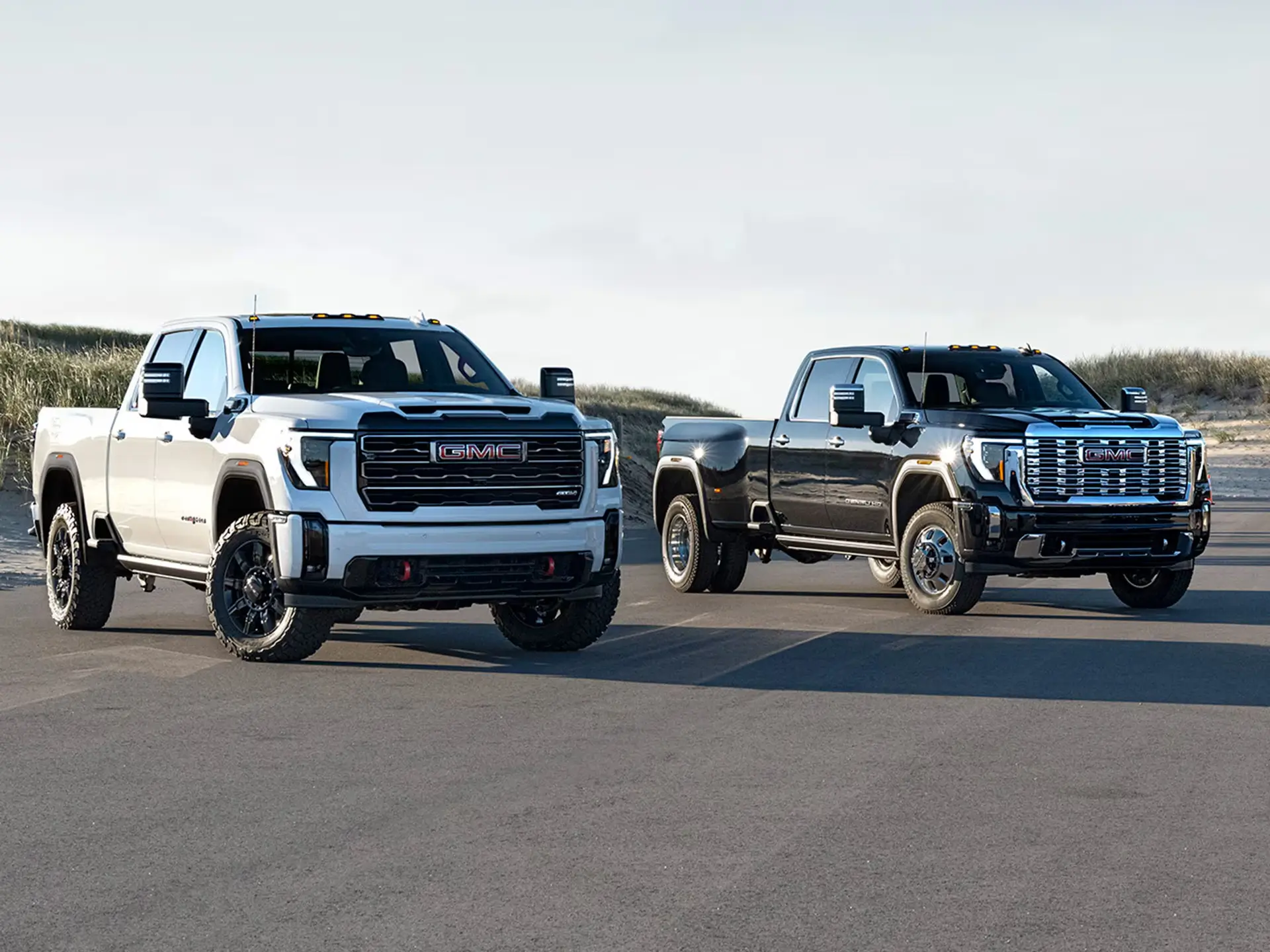
Differences Between The 2026 and 2025 GMC Sierra 1500
Not sure whether to buy a 2026 or 2025 GMC Sierra 1500? This breakdown covers the key updates for 2026—like Glacier White Tricoat, Coastal Dune, new wheel options, towing tech improvements, and a refined 6.2L V8 exhaust—plus the core features that remain the same across both model years.
2025 Heavy Duty Vehicle Tax Benefits
Buying a work-ready Chevy, Buick, or GMC in 2025? You may be able to expense a large portion of the vehicle cost in year one using Section 179 and bonus depreciation. This guide breaks down key limits, GVWR rules, SUV caps, and smart planning tips so your next vehicle purchase works harder for your business.